You used to walk a few miles every morning without thinking twice. Maybe your thing is pickleball, golf, tennis, working out, traveling, or simply staying busy.
Then your heel started hurting.
At first, you figured it would go away. You bought different shoes. You stretched. You rested for a few days. Maybe you took an over-the-counter pain reliever.
But every morning, those first few steps still remind you that something isn’t right.
Plantar fasciitis can be especially frustrating for active adults because the answer you often hear is, “Just rest.”
But what if you don’t want to stop moving?
If heel pain has been keeping you from the activities you enjoy, Acoustic Shockwave Therapy may be a non-surgical treatment option worth considering.
Does Shockwave Therapy for Plantar Fasciitis Actually Work?
This is usually the first question people ask—and it’s a good one.
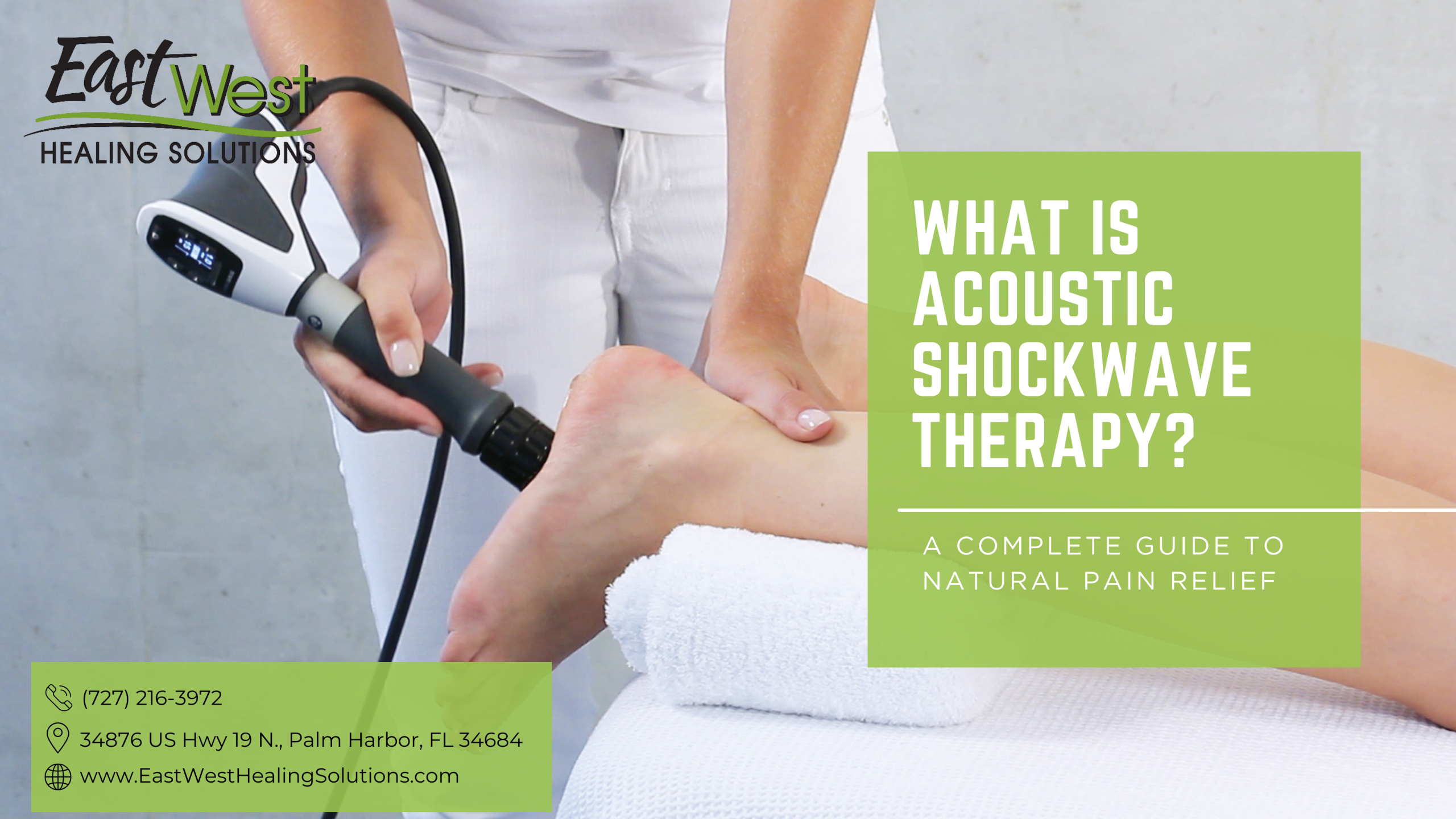
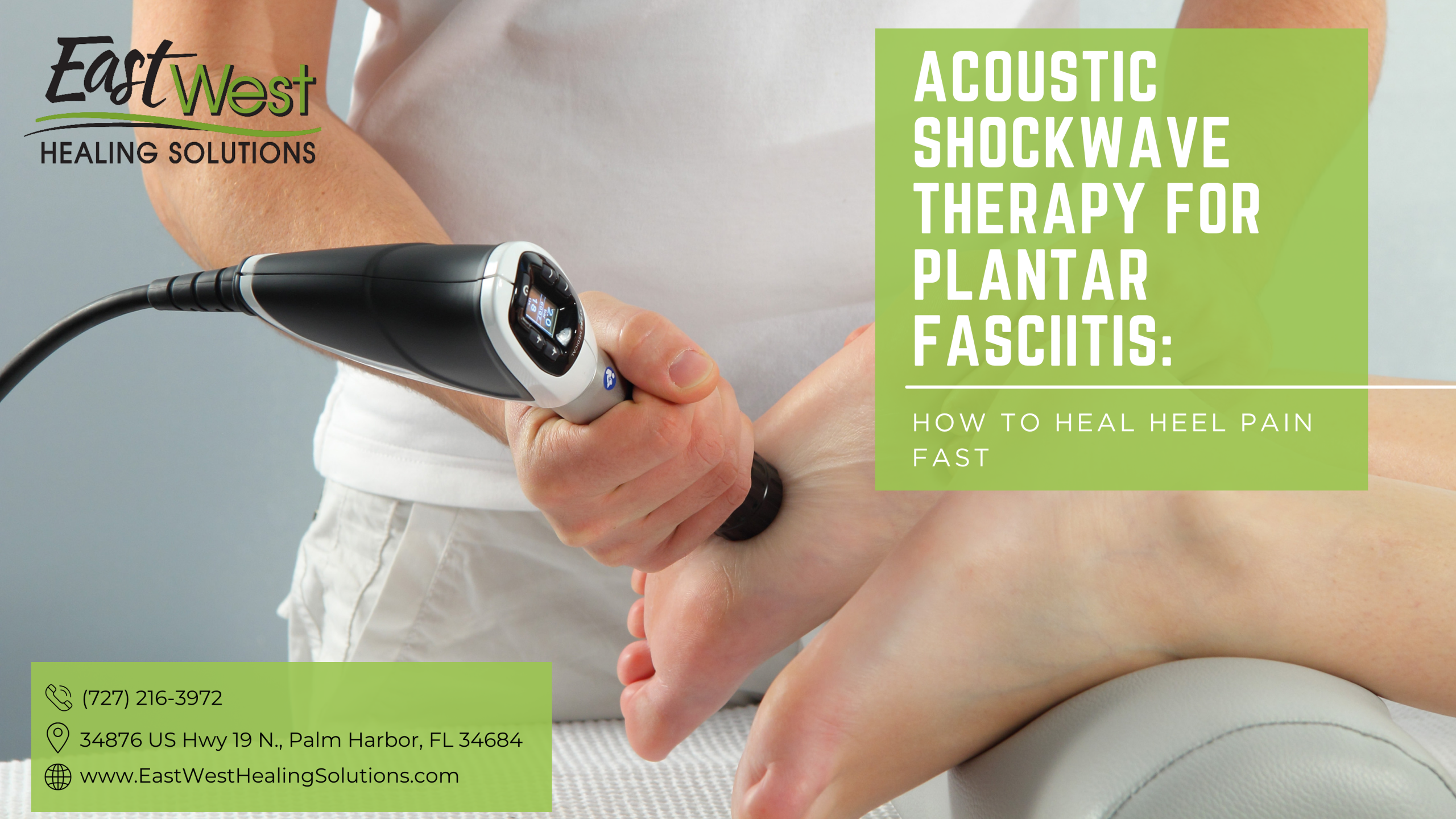
Acoustic Shockwave Therapy, also known as Extracorporeal Shockwave Therapy (ESWT), uses acoustic pressure waves directed at the painful area. The goal is to stimulate a biological response in the tissue and support the body’s natural healing processes.
Research has shown that shockwave therapy can help reduce pain and improve function in people with plantar fasciitis, particularly in persistent cases.
That doesn’t mean it is a magic cure or that every patient will respond exactly the same way.
Plantar fasciitis can be influenced by several factors, including your activity level, foot mechanics, calf flexibility, footwear, how long you’ve been experiencing symptoms, and the amount of stress repeatedly placed on the plantar fascia.
That’s why an evaluation matters.
Rather than simply asking, “Does shockwave therapy work?” a better question may be:
“Is shockwave therapy appropriate for my heel pain?”
For someone who has been dealing with persistent plantar fasciitis despite stretching, changing shoes, modifying activity, or trying other conservative treatments, it may be an option to discuss with a qualified provider.
Is Shockwave Therapy Painful?
Let’s address the name first.
“Shockwave therapy” sounds a lot more intimidating than it needs to.
There are no electrical shocks involved.
During treatment, a handheld device delivers acoustic pressure waves to the targeted area of the heel and foot.
Because the area is already irritated or sensitive, you may feel tenderness or discomfort during treatment. The sensation can vary from person to person, and treatment intensity can typically be adjusted based on your tolerance and the protocol being used.
Most importantly, Acoustic Shockwave Therapy is non-invasive.
There are no surgical incisions.
There are no stitches.
And unlike an injection, there is no needle being inserted into the painful area.
For active adults who would prefer to explore conservative options before considering invasive procedures, that can be an important advantage.
Will I Have to Stop Walking or Exercising?
For many active people, this may be an even bigger concern than the treatment itself.
You don’t simply want your heel to stop hurting.
You want to keep walking.
You want to play golf.
You want to travel.
You want to work out.
You want to chase the grandkids around without thinking about your foot every five minutes.
The goal of treating plantar fasciitis isn’t to turn an active person into an inactive one. It’s to help you return to the activities you enjoy as safely and comfortably as possible.
One advantage of a non-surgical approach such as shockwave therapy is that you aren’t dealing with a surgical incision and the recovery associated with an operation.
However, that doesn’t necessarily mean you should continue every activity at full intensity while your heel is being treated.
Your provider may recommend temporarily modifying certain activities based on the severity of your symptoms and how your foot responds to treatment.
Treatment may also include more than shockwave therapy.
Stretching the plantar fascia and calf, improving mobility, strengthening appropriate muscles, addressing footwear, or modifying certain activities may all be part of a more comprehensive approach.
The ultimate goal isn’t simply getting through today’s walk with less pain.
It’s helping you stay active for the long run.
Why Not Just Rest, Take Ibuprofen, or Buy Better Shoes?
For mild cases of plantar fasciitis, conservative measures may be enough.
But if you’ve been dealing with heel pain for weeks or months, you’ve probably already tried a few of them.
Rest
Reducing activities that aggravate your heel can help calm symptoms.
The problem?
For someone who values staying active, “stop doing everything that hurts” isn’t a particularly satisfying long-term strategy.
And if contributing factors haven’t been addressed, the discomfort may return when you resume your normal activities.
Over-the-Counter Pain Medication
Nonprescription medications may temporarily reduce pain for some people.
But reducing pain isn’t necessarily the same thing as addressing the underlying problem. Medications also aren’t appropriate for everyone, so they should be used according to your healthcare provider’s recommendations.
Shoes and Orthotics
Supportive footwear or orthotics may help manage the forces being placed on your foot.
They can be useful components of a treatment plan, but changing shoes alone isn’t always enough to resolve persistent plantar fasciitis.
Cortisone Injections
Corticosteroid injections are sometimes used to reduce pain and inflammation associated with plantar fasciitis.
They may provide relief for some patients, but they involve an injection and may not be the right option for everyone.
Surgery
Surgery is generally considered only for selected cases of persistent plantar fasciitis that haven’t responded to conservative treatment.
While surgery may be appropriate in certain circumstances, it also comes with the considerations associated with an invasive procedure, including recovery time and potential complications.
Acoustic Shockwave Therapy
Shockwave therapy provides another option between simply managing symptoms and pursuing something more invasive.
It is non-surgical and doesn’t require an incision. Research supports its use as a treatment option for plantar fasciitis, although results and treatment timelines vary from patient to patient.
The important point is that plantar fasciitis treatment doesn’t have to be an either/or decision between “live with it” and “have surgery.”
There may be other options in between.
How Long Does Shockwave Therapy Take to Work for Plantar Fasciitis?
If you’ve been limping out of bed every morning, understandably, you want relief as quickly as possible.
But plantar fasciitis usually doesn’t develop overnight, and irritated tissue may need time to respond to treatment.
Some people may notice changes sooner than others. The number of shockwave therapy sessions recommended and the amount of time it takes to see improvement can depend on several factors, including:
- How long you’ve had heel pain
- The severity of your symptoms
- Your normal activity level
- Your foot mechanics
- Other health factors
- The treatment protocol being used
- How closely you follow recommended home care and activity modifications
That’s another reason to be cautious about treatments promising an instant “cure.”
A better goal is steady improvement that allows you to return to the activities that matter to you.
Your Heel Pain Doesn’t Have to Decide What You Can Do
There comes a point when heel pain becomes about much more than your heel.
You start looking at the walking trail and wondering whether you should go.
You skip the pickleball game.
You reconsider the sightseeing excursion on vacation.
You stop wearing certain shoes.
You plan your day around how much walking you’ll have to do.
Little by little, pain starts making decisions for you.
If plantar fasciitis has continued despite rest, stretching, shoe changes, or other conservative approaches, it may be time to explore another option.
Acoustic Shockwave Therapy is a non-invasive treatment that may help reduce pain and improve function in people with plantar fasciitis. More importantly, it can be incorporated into a treatment plan designed around what matters most to you: getting back to the activities you love and staying active as you get older.
Ready to Take the Next Step?
If heel pain is keeping you from walking, exercising, traveling, playing sports, or simply enjoying your normal routine, schedule an appointment with East West Healing Solutions. Call (727) 216-3972
We’ll evaluate your heel pain, discuss what you’ve already tried, talk about your activity goals, and determine whether Acoustic Shockwave Therapy may be an appropriate treatment option for you.
Because the goal isn’t simply to have less heel pain. It’s to get you back to the life you don’t want to sit out.